This post may contain affiliate links. As an Amazon Associate I earn from qualifying purchases.
Last Updated on April 17, 2026 by Guitar Frequency
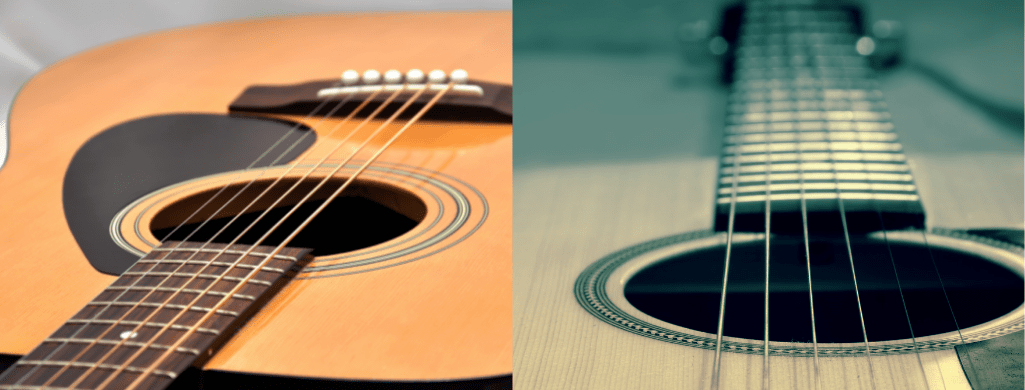
The action on a guitar — the distance between the strings and the fretboard — is one of the most important factors in how easy a guitar is to play. High action means you have to press harder to fret notes, which causes finger fatigue, slows down chord changes, and makes barre chords genuinely painful for beginners.
Low action fixes all of that. Strings closer to the fretboard require less pressure, less effort, and allow you to build technique faster without fighting your instrument.
This guide is aimed at beginners and players specifically looking for an acoustic with low, comfortable action out of the box. We’ve researched player feedback extensively from guitar communities and forums to give you an honest picture of each guitar — not just the manufacturer’s claims.
One Important Thing To Know First
No two guitars from the same production run will have identical action. Even within the same model, action can vary from unit to unit depending on how the guitar was set up at the factory. This is normal for mass-produced instruments.
What we’re looking for here are guitars from brands and models that consistently set up well — brands with a reputation for factory setups that don’t need immediate correction. If you buy online and the action feels high, a basic setup from a guitar tech ($40-70) can transform a good guitar into a great one. Don’t write off a guitar just because the out-of-box setup isn’t perfect.
With that said, here are the best acoustic guitars with low action for beginners and players who prioritise playability.
Best Acoustic Guitars With Low Action
1. Fender CD-60S — Best Overall for Beginners
| Body Shape | Dreadnought |
| Top | Solid Spruce |
| Back & Sides | Laminated Mahogany |
| Neck | Mahogany |
| Fingerboard | Walnut |
| Frets | 20 |
| Scale Length | 25.3″ |
The Fender CD-60S is consistently recommended as the best beginner acoustic guitar at its price point, and the action is a major reason why. Fender specifically designed this guitar with a “Comfort Neck Carve” — a slim neck profile with rolled fretboard edges that makes it noticeably easier to play than most guitars in this price range.
The solid spruce top is a genuine standout at this price. Most guitars under $250 use laminate tops throughout — the CD-60S uses solid spruce, which improves both tone and resonance and means the guitar will continue to open up and improve with age as the wood matures.
What players actually say: The CD-60S is widely praised for its consistent action and intonation across the fretboard — something that is genuinely unusual at this price point. Multiple reviewers note that the action remains consistent past the 7th fret, where budget guitars typically start to rise uncomfortably. MusicRadar found that out of the box the intonation was accurate and the action was low without causing fret buzz, even when tuning down. The main honest criticism is that the tone, while decent, doesn’t quite have the warmth and fullness of more expensive guitars — but for a beginner, the playability far outweighs the tonal limitations.
Who this suits: Beginners of all ages who want a guitar that’s comfortable to play from day one without needing a setup. Also a good choice as a travel or backup guitar for more experienced players.
Worth knowing: The CD-60S comes in a spruce top and all-mahogany version. The spruce version is slightly brighter, the all-mahogany slightly warmer — both have the same excellent playability. There’s also a CD-60SCE version with a cutaway and electronics if you want to plug in.
2. Yamaha FG800 — Best Tone for the Money
| Body Shape | Dreadnought |
| Top | Solid Spruce |
| Back & Sides | Laminated Nato |
| Neck | Nato |
| Fingerboard | Walnut |
| Frets | 20 |
| Scale Length | 25.6″ |
The Yamaha FG800 has been one of the most recommended beginner acoustic guitars for years. Like the CD-60S it has a solid spruce top at a budget price, Yamaha’s scalloped bracing system for improved resonance, and a tone that genuinely punches above its price point.
What players actually say: This is where we have to be honest with you — the FG800 has a known action inconsistency problem. Many players report great action straight out of the box. But a significant number of buyers report action of 4-5mm at the low E string, which is high enough to make playing genuinely difficult and uncomfortable. One beginner player on a guitar forum documented receiving an FG800 with 4.5mm action straight out of the box and having to replace the saddle and file the nut to get it to a playable 2.5mm. This is not universal — plenty of FG800s ship with perfectly comfortable action — but it’s a real enough issue to flag.
The tone when set up correctly is outstanding for the price. Yamaha’s scalloped bracing gives it a fuller, louder sound than most guitars at this level. If you buy from a store and can play it first, the FG800 at its price is exceptional value. If you’re buying online, be aware that a setup may be needed.
Who this suits: Players who prioritise tone and value and are either able to try the guitar in person before buying, or are comfortable getting a basic setup if needed.
Worth knowing: The urea nut and saddle are the weak point of this guitar. Upgrading to bone ($20-30 in parts, plus tech labour) noticeably improves the tone and is worth doing once you’re comfortable with the guitar.
3. Taylor Academy 10 — Best Premium Beginner Option
| Body Shape | Dreadnought |
| Top | Solid Sitka Spruce |
| Back & Sides | Layered Sapele |
| Neck | Maple |
| Fingerboard | Ebony |
| Frets | 20 |
| Scale Length | 24.875″ |
The Taylor Academy 10 sits at a higher price point than the other guitars on this list but deserves inclusion because it solves the beginner playability problem better than almost anything else available. Taylor built this guitar specifically for new players — not as a budget version of an existing model, but as a purpose-designed beginner instrument.
The shorter 24.875″ scale length means less string tension, which makes fretting easier and bending less demanding. The neck is slim and fast. The action from the factory is consistently low — Taylor’s quality control is significantly better than budget brands. And the beveled armrest is a genuinely useful ergonomic feature that makes long practice sessions more comfortable, something you find on much more expensive guitars.
What players actually say: The consistent verdict is that this guitar feels and plays far better than its price suggests. Guitar World described the Academy Series as guitars that can “inspire and go the distance with a guitarist from bedroom to stage.” Premier Guitar noted that the setup and intonation were excellent out of the box. Players who’ve compared it directly to the CD-60S and FG800 note a clear step up in feel and playability, with the Taylor neck profile in particular drawing praise. The tone is bright and clear — very much the Taylor character — which suits players who like a defined, articulate acoustic sound.
Who this suits: Beginners who want to invest properly in their first guitar and not upgrade for several years. If budget allows, this is the best starting point on this list.
Worth knowing: The Academy 10 does not have electronics. If you want to plug in, look at the Academy 10e which adds a Taylor ES-B pickup system.
4. Ibanez PC12MH — Best for Players Who Want a Smaller Body
| Body Shape | Grand Concert |
| Top | Okoume (laminate) |
| Back & Sides | Okoume (laminate) |
| Neck | Nyatoh |
| Fingerboard | Laurel |
| Frets | 20 |
| Scale Length | 25″ |
Ibanez has a strong reputation for low action across their entire guitar range — it’s one of the things they consistently do well. The PC12MH is their grand concert body acoustic at an affordable price, and it delivers the low, comfortable action Ibanez is known for.
The grand concert body is smaller than a dreadnought — narrower waist, shallower depth — which makes it more comfortable for players with smaller frames, children, or anyone who finds a full-size dreadnought awkward to hold. The okoume construction (top, back and sides) produces a warm, woody tone that’s particularly good for fingerpicking and softer playing.
What players actually say: The PC12MH gets consistent praise for its playability. Ibanez’s factory setup is reliable and the thin neck profile makes chord transitions noticeably easier than on some competitors. The tone is warm and balanced — not as loud or projecting as a dreadnought, which is a trade-off of the smaller body, but the character is pleasant and the guitar responds well to a light touch. Players with smaller hands consistently rate it as one of the most comfortable options at this price.
Who this suits: Players with smaller hands or frames, younger players, fingerpickers, anyone who finds dreadnought guitars physically uncomfortable.
Worth knowing: The PC12MH is an all-laminate guitar — there’s no solid wood here unlike the CD-60S, FG800 and Taylor Academy 10. This limits the tonal ceiling but keeps the price down and makes the guitar more resistant to humidity changes, which matters if you live in a dry or very humid climate.
5. Jasmine S34C — Best Budget Option Under $100
| Body Shape | NEX (Grand Orchestra) |
| Top | Spruce (laminate) |
| Back & Sides | Agathis (laminate) |
| Neck | Nato |
| Fingerboard | Rosewood |
| Frets | 20 |
| Scale Length | 25.5″ |
The Jasmine S34C is the budget option on this list — priced well under $100, it’s a genuine starter guitar for players who aren’t ready to commit to a bigger investment. Jasmine is a subsidiary of Takamine, which gives it more manufacturing credibility than most guitars at this price point.
The NEX body shape is a cross between a dreadnought and an orchestra model — slightly smaller than a full dreadnought with a comfortable waist that makes it easier to hold while seated.
What players actually say: For the price, the S34C consistently delivers. Players report it arrives with playable action and decent intonation — considerably better than most no-name guitars in this price bracket. The tone is limited — all-laminate construction at this price point doesn’t produce anything special — but it’s not unpleasant, and for a first guitar where the priority is building technique rather than tone, it does the job. The rosewood fingerboard is a genuine surprise at this price and gives the guitar a more premium feel than the price suggests.
Who this suits: Absolute beginners who want to try guitar before committing to a bigger purchase. Parents buying a first guitar for a child. Anyone on the tightest possible budget.
Worth knowing: At this price, build quality can be inconsistent. If buying online, read recent reviews before purchasing and make sure the seller has a good return policy.
What Is Guitar Action and Why Does It Matter?
Action refers to the height of the strings above the fretboard. It’s measured at the 12th fret — the standard measurement points are the low E string and the high E string.
As a general guide, typical low action measurements for acoustic guitar are around 2.0-2.5mm on the high E string and 2.5-3.0mm on the low E string at the 12th fret. Higher than this and the guitar starts to feel stiff and effortful. Too low and you get fret buzz — strings vibrating against the frets on adjacent positions.
For beginners, the priority is always on the higher end of low — low enough to be comfortable, but not so low that every chord produces buzz. As you develop technique and finger strength, you can adjust the action to your preference.
How To Adjust the Action on an Acoustic Guitar
If your guitar’s action is higher than you’d like, there are three places where adjustments can be made. Before attempting any of these yourself, make sure you understand the parts of a guitar — it’ll make the process much clearer.
The Nut
The nut sits at the headstock end of the neck and determines the string height at the first few frets. If your guitar feels difficult to play in the first three frets specifically, the nut slots may be too high. Lowering nut slots requires careful filing and is best left to a guitar tech unless you’re confident with a file and have a spare nut in case of mistakes.
The Saddle
The saddle sits in the bridge and is the primary adjustment point for action at the higher frets (above the 5th fret). Most acoustic saddles are removable — you can sand the bottom of the saddle to lower it, or replace it entirely. This is a relatively beginner-friendly adjustment and a common first step when a guitar’s action is high. Lowering the saddle by 1mm reduces the action at the 12th fret by approximately 0.5mm.
The Truss Rod
The truss rod runs through the neck and controls neck relief — the slight forward bow in the neck that allows the strings to vibrate without buzzing. Adjusting the truss rod affects action across the entire fretboard and is the most complex of the three adjustments. If you suspect your neck relief is wrong, we recommend taking the guitar to a tech rather than adjusting it yourself unless you know what you’re doing. Over-tightening a truss rod can crack a neck.
Frequently Asked Questions
Is low action always better?
Not always. Very low action can cause fret buzz and reduces the volume and projection of an acoustic guitar. Some experienced players — particularly those who play hard or use heavy strings — prefer slightly higher action for more dynamic headroom. For beginners, low action is almost always preferable as it makes learning significantly easier.
Can any acoustic guitar be set up with low action?
To a point, yes. Most guitars can have their action lowered by adjusting the nut, saddle, and truss rod. However, a guitar with a bowed neck, high frets, or poor fretwork may not be able to achieve low action without fret buzz regardless of how well it’s set up. This is why buying a guitar from a reputable brand matters — quality fretwork is the foundation of good action.
Should I get my new guitar set up professionally?
It’s worth considering, particularly if you’re buying online and can’t play the guitar before purchase. A basic setup from a guitar tech costs $40-70 and typically includes adjusting the truss rod, nut slots, and saddle height, plus checking intonation and fret ends. On a budget guitar it can make a dramatic difference to playability. Many experienced players consider a setup a standard part of buying a new guitar.
What is the best acoustic guitar for beginners with small hands?
The Ibanez PC12MH is a strong choice due to its grand concert body shape and slim neck profile. The Taylor Academy 10 is also excellent — the shorter 24.875″ scale length reduces string tension and makes the guitar more manageable for players with smaller hands. If budget is a constraint, the Jasmine S34C’s NEX body is more compact than a standard dreadnought and easier to hold.